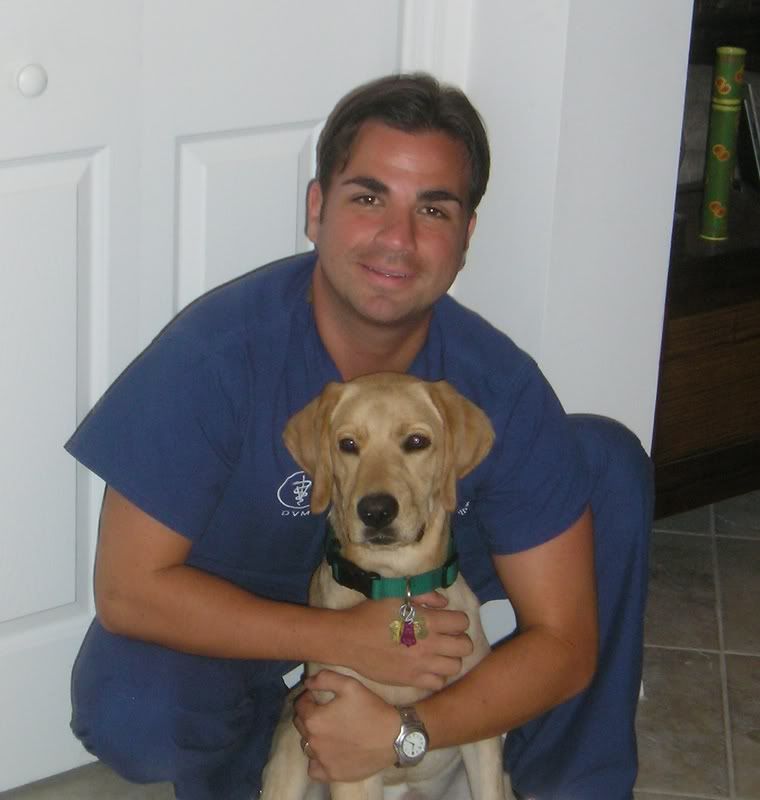
"I can't afford it," is quickly becoming an all too familiar statement made by hospital clients when treatments or procedures are recommended to help their ailing pets these days. The problem is not that I am overpriced for my demographic - in fact, my hospital is known to be one of the more reasonably priced animal hospitals in the area. What's more, just 6 months ago, most of my clients had no qualms about investing in their pet's health when medications, treatments, or procedures were necessary to maintain optimal health. What has changed from 6 months ago when my hospital was still in the midst of enjoying the continued growth that begun in 2004 when I took over as owner? While I am no economist or politician, I do watch the news and pay at the pump to fill my gas tank. As such, I am inclined to opine that soaring gas prices and our depressed economy have finally begun to reek their havoc on the animal health industry.
As a veterinarian, this becomes extremely frustrating, as client inability to afford gold standard work-ups, treatments, and procedures, leads to my having to practice medicine with one hand tied behind my back. Not only am I faced with the professional disappointment that I am often precluded from practicing the best quality medicine, but I have to live with the knowledge that some of my patients fail to receive the very best modern veterinary medicine and my abilities have to offer. Finally, while some less fortunate pet owners that cannot afford quality care for their pet react to this dilemma apathetically or even callously, for many, it is an utterly heartbreaking, hopeless experience - which in turn is an utterly heartbreaking experience for the attending veterinarian.
From receptionist, admitting technician, and attending veterinarian, to pet owner and pet, all who are involved in the animal health process are deeply affected when finances get in the way of quality pet health care. While this aspect of veterinary medicine has always been and will always be a frustrating, ugly side of veterinary medicine, it seems to occur now more than ever, and increasing in prevalence with time. For sake of the family pets of our nation and for many other important reasons, we should all hope that there is light at the end of the tunnel for this struggling economy.
Wednesday, June 4, 2008

Thursday, May 22, 2008
High Suicide Rate Among Veterinarians
Krista Schultz highlighted a little known and surprising fact in her article in the May 2008 issue of DVM News Magazine, that veterinarians have a four times greater suicide rate proportionally than the general population, and two times greater than that of any other health profession. According to the article, the basis for this information came from studies conducted in the UK.
The reasons for this disproportionally higher rate of suicide among veterinarians is not clear, but the article hints at certain factors that may contribute, such as job stress, euthanasia acceptance, and lethal drug access. Regarding job stress or job dissatisfaction, Kristin Schultz's article indicates that depression is a factor predisposing to suicide because "those choosing to join the veterinary profession may have predisposed personalities that ultimately lead to depression...." Regret may also be a factor, according to the article, in that only 53% of practicing veterinarians would become a veterinarian all over again now knowing the reality of the profession - that is almost half that do not feel that the profession has lived up to their expectations.
With regard to euthanasia acceptance, veterinarians "may experience uncomfortable tension between their desire to preserve life, and their inability to treat a case effectively, which may be ameliorated by adapting their attitudes to preserving life to perceive euthanasia as a positive outcome." The article insinuates that this adjusted attitude toward death may subsequently facilitate self justification and lower inhibition toward suicide as a rational solution to their own problems.
While Ms. Schultz's article does not arrive at any concrete conclusions, I will conclude this post by offering my own take as a veterinarian why suicide rate may be disproportionally high in veterinary medicine. In my case, prior to joining my first private practice as a newly graduated vet, I had idealized the profession, not only as a noble pursuit of the highest order (which I still feel is the case), but also that the public perception of the veterinarian would reflect that. On my very first case, I found out how mistaken I was, when I was accused of price gouging by a client furious that I had ordered urinalysis and urine cultures for a patient exhibiting signs of lower urinary tract disease. What's more, rather than decline the tests which she was well within their right to do while still at the office, she accepted, got her medication, then later called to yell at me over the telephone.
My first case was but one of many times that people have accused me price gouging and much worse since then, all the while myself practicing with utmost integrity and honesty, only trying to do my very best for my patients. That has and will continue to be my biggest frustration with veterinary medicine.
While this will not lead me to suicide, I can clearly see why a person prone to depression could be led down that dark path over time. No matter how much one tries to realize that the real problem lies with the people that use vets as scape goats for their own financial troubles, consequently hurling unwarranted, hurtful accusations and judgements, it never ceases to hurt when one pours one's heart and soul into helping an animal, yet is considered by an owner to be nothing more than a scamming used car salesman.
But, I have enough wonderful clients that truly appreciate the dedication we put into helping their animals and gain more every day, that make what we do worth the effort. For that reason and the fact the its about helping the furry ones with no voice after all, after seven years of practice, I remain one of the 53% that would be a vet all over again, as, aside from pitching for the NY Yankees, there is nothing else I can see myself ever wanting to do. For the 47% that do not agree with me, however, I truly understand.
The reasons for this disproportionally higher rate of suicide among veterinarians is not clear, but the article hints at certain factors that may contribute, such as job stress, euthanasia acceptance, and lethal drug access. Regarding job stress or job dissatisfaction, Kristin Schultz's article indicates that depression is a factor predisposing to suicide because "those choosing to join the veterinary profession may have predisposed personalities that ultimately lead to depression...." Regret may also be a factor, according to the article, in that only 53% of practicing veterinarians would become a veterinarian all over again now knowing the reality of the profession - that is almost half that do not feel that the profession has lived up to their expectations.
With regard to euthanasia acceptance, veterinarians "may experience uncomfortable tension between their desire to preserve life, and their inability to treat a case effectively, which may be ameliorated by adapting their attitudes to preserving life to perceive euthanasia as a positive outcome." The article insinuates that this adjusted attitude toward death may subsequently facilitate self justification and lower inhibition toward suicide as a rational solution to their own problems.
While Ms. Schultz's article does not arrive at any concrete conclusions, I will conclude this post by offering my own take as a veterinarian why suicide rate may be disproportionally high in veterinary medicine. In my case, prior to joining my first private practice as a newly graduated vet, I had idealized the profession, not only as a noble pursuit of the highest order (which I still feel is the case), but also that the public perception of the veterinarian would reflect that. On my very first case, I found out how mistaken I was, when I was accused of price gouging by a client furious that I had ordered urinalysis and urine cultures for a patient exhibiting signs of lower urinary tract disease. What's more, rather than decline the tests which she was well within their right to do while still at the office, she accepted, got her medication, then later called to yell at me over the telephone.
My first case was but one of many times that people have accused me price gouging and much worse since then, all the while myself practicing with utmost integrity and honesty, only trying to do my very best for my patients. That has and will continue to be my biggest frustration with veterinary medicine.
While this will not lead me to suicide, I can clearly see why a person prone to depression could be led down that dark path over time. No matter how much one tries to realize that the real problem lies with the people that use vets as scape goats for their own financial troubles, consequently hurling unwarranted, hurtful accusations and judgements, it never ceases to hurt when one pours one's heart and soul into helping an animal, yet is considered by an owner to be nothing more than a scamming used car salesman.
But, I have enough wonderful clients that truly appreciate the dedication we put into helping their animals and gain more every day, that make what we do worth the effort. For that reason and the fact the its about helping the furry ones with no voice after all, after seven years of practice, I remain one of the 53% that would be a vet all over again, as, aside from pitching for the NY Yankees, there is nothing else I can see myself ever wanting to do. For the 47% that do not agree with me, however, I truly understand.
Thursday, May 8, 2008
Amazon, You Have Some Explaining To Do
When it was first brought to my attention by a colleague that Amazon was selling how-to dog fighting books, I thought there was no way that it could be true. However, after checking for myself that Amazon was indeed selling how-to dog fighting books, I was both shocked and appalled to learn the truth. Yes, it is true that for those interested in engaging in the despicable and illegal pass time of fighting dogs for sport, the following titles are available for purchase at Amazon:
THE DOG PIT - How to Select, Breed , Train and Manage Fighting Dogs
GHETTO DAWG AND GHETTO DAWG 2
THE BREEDING AND MANAGEMENT OF FIGHTING DOGS
THE WORLD OF FIGHTING DOGS (with "school binding" no less)
It is amazing to me that in the wake of Michael Vick's dog fighting ring bringing the cruel and illegal sport of dog fighting to the media forefront, that a so called ethical vendor can promote the sale of instructional books on the subject. One may acknowledge that an occasional bad book or video slips under the radar and winds up on an otherwise fine website, after all they do offer literally millions of books for sale. However, I find it curious that these same types of books did not slip under the radar of BarnesandNoble.com.
My message to Amazon is the following:
Just as it is completely unethical for a respected online bookseller to promote the sale of books that teach our citizens the art of operating meth labs, running prostitution rings, or organizing a terrorist cell, it is equally as immoral to promote the sale of instructional books on the vicious, inhumane, illegal sport of dog fighting. For the moment, I will give you the benefit of the doubt that this may have been an unintentional oversight, and give you the opportunity remove these titles from your selection. While my humble little blog may not reach your top brass, I, as well as countless others, have filed the online petition to request that all dogfighting titles be removed from your selection. With ample and numerous notifications, you have no excuse to do the right thing in a timely fashion.
For those who would like to participate in this petition to place as much pressure on Amazon as possible to stop promoting dog fighting how-to literature, you may access the petition at the webpage below:
http://www.thepetitionsite.com/1/tell-amazon-to-stop-selling-dog-fighting-material
THE DOG PIT - How to Select, Breed , Train and Manage Fighting Dogs
GHETTO DAWG AND GHETTO DAWG 2
THE BREEDING AND MANAGEMENT OF FIGHTING DOGS
THE WORLD OF FIGHTING DOGS (with "school binding" no less)
It is amazing to me that in the wake of Michael Vick's dog fighting ring bringing the cruel and illegal sport of dog fighting to the media forefront, that a so called ethical vendor can promote the sale of instructional books on the subject. One may acknowledge that an occasional bad book or video slips under the radar and winds up on an otherwise fine website, after all they do offer literally millions of books for sale. However, I find it curious that these same types of books did not slip under the radar of BarnesandNoble.com.
My message to Amazon is the following:
Just as it is completely unethical for a respected online bookseller to promote the sale of books that teach our citizens the art of operating meth labs, running prostitution rings, or organizing a terrorist cell, it is equally as immoral to promote the sale of instructional books on the vicious, inhumane, illegal sport of dog fighting. For the moment, I will give you the benefit of the doubt that this may have been an unintentional oversight, and give you the opportunity remove these titles from your selection. While my humble little blog may not reach your top brass, I, as well as countless others, have filed the online petition to request that all dogfighting titles be removed from your selection. With ample and numerous notifications, you have no excuse to do the right thing in a timely fashion.
For those who would like to participate in this petition to place as much pressure on Amazon as possible to stop promoting dog fighting how-to literature, you may access the petition at the webpage below:
http://www.thepetitionsite.com/1/tell-amazon-to-stop-selling-dog-fighting-material
Thursday, May 1, 2008
Thoughts On PETA (People for the Ethical Treatment of Animals)
Naturally, working in the industry that I do, I am often confronted by people wondering how I feel about PETA (People for the Ethical Treatment of Animals) , a national animal rights organization. This question comes up increasingly more frequently as the organization draws more people to its cause, gains media attention, and attracts many celebrity members that increase its profile. Realistically, my overall outlook on PETA is positive, but I do take exception to some of their tenants, and/or extremism of the some of their members. Therefore, my answer to this question is not straight forward, which is why I am compelled to blog about it.
On the positive side, PETA has been pivotal in the exposure of inexcusable cruelty in Kentucky Fried Chicken's treatment of their chickens, providing indisputable video evidence of specific acts of cruelty. PETA has been an important source of awareness of battery raised chickens that are raised isolated and severely confined, while being fattened so quickly that skeletal supporting structures are often useless for weight bearing due to deformation or even fracture (not having the ability to move around also weakens bones and skeletal supporting structures). They have also created awareness about egg layers also being isolated and confined as they produce countless eggs for collection and sale. While they promote vegetarianism, they have promoted the alternative of those not prepared to take that leap, of choosing to buy only free roaming chickens and eggs layed only by free roaming chickens. Why still food animals, these chickens at least get to spend their lives socializing with other birds and having the ability to move around. Many would not know these things if not for PETA.
PETA is one of the greatest forces in the fight against puppy mills, a situation in our country that I am personally, passionately appalled by. On this front, PETA is instrumental about spreading awareness by photographing and filming these prisons of greed and exposing pet stores that patronize these facilities. They expose and fight against companies that test on animals in unnecessarily cruel manners.
Finally, I applaud PETA's campaign against the annual Canadian seal hunt, where thousands of baby seals are brutally clubbed to death, sometimes just for the sport of it, other times to collect and sell their skins. Most recently in New York, they strongly campaigned and successfully lobbied for the banning of genital or anal electrocution of animals harvested for fur (minks, foxes, musk rats, etc.). This inhumane method of killing is an inexpensive way to kill these animals while not damaging their valuable hair coats. Under New York and PETA's lead, many states are expected to follow, according to an article in the International Herald Tribune, a reputable online animal news source.
Where I fault PETA at times is the extreme views of some of their members. Some call for the complete and total liberation of animals, meaning zero animal research, no circuses, no zoos, not even seeing eye or assistance dogs. They create campaigns against medical charities that fund medical research that implement animal research through outlets such as CaringConsumer.com. Among the groups PETA opposes are the St. Jude Children's Research Hospital and the Lance Armstrong Foundation. Finally, many demonize people that consume animal products, whether it be meat, eggs, milk, or cheese.
I do not support this type of extremism, and really feel that their more radical members are counterproductive to their cause. I believe that animal testing should be done in an optimally humane manner and closely monitored, but is an essential component of medical advancement in both human and veterinary medicine. I love zoos and animal exhibits that provide a hospitable habitat for well fed and medically cared for animals, while offering our youth to view them and gain an appreciation and respect for the majesty of animals in nature. Finally, while I generally do not eat red meat, I enjoy [free roaming] poultry and eggs, dairy products, and seafood. We are omnivores that thrive on animal food sources to sustain life just like dogs, cats, and other animals. We should not be demonized for doing what nature intended for us to do, provided we make every effort to ensure that treatment of the animals is humane, and slaughter is performed with the least possible pain.
As one can plainly see, I have mixed feelings about the organization PETA. However, the good that they do for the animals of our nation exceeds my problems with the extreme views some of their more radical members have. Most of the PETA members I know are rationally thinking, realistic, compassionate people, leading me to be of the opinion that the radicals are the minority of this organization. On the whole, while I am not member, I am grateful for PETA's existence and the good work that they do.
On the positive side, PETA has been pivotal in the exposure of inexcusable cruelty in Kentucky Fried Chicken's treatment of their chickens, providing indisputable video evidence of specific acts of cruelty. PETA has been an important source of awareness of battery raised chickens that are raised isolated and severely confined, while being fattened so quickly that skeletal supporting structures are often useless for weight bearing due to deformation or even fracture (not having the ability to move around also weakens bones and skeletal supporting structures). They have also created awareness about egg layers also being isolated and confined as they produce countless eggs for collection and sale. While they promote vegetarianism, they have promoted the alternative of those not prepared to take that leap, of choosing to buy only free roaming chickens and eggs layed only by free roaming chickens. Why still food animals, these chickens at least get to spend their lives socializing with other birds and having the ability to move around. Many would not know these things if not for PETA.
PETA is one of the greatest forces in the fight against puppy mills, a situation in our country that I am personally, passionately appalled by. On this front, PETA is instrumental about spreading awareness by photographing and filming these prisons of greed and exposing pet stores that patronize these facilities. They expose and fight against companies that test on animals in unnecessarily cruel manners.
Finally, I applaud PETA's campaign against the annual Canadian seal hunt, where thousands of baby seals are brutally clubbed to death, sometimes just for the sport of it, other times to collect and sell their skins. Most recently in New York, they strongly campaigned and successfully lobbied for the banning of genital or anal electrocution of animals harvested for fur (minks, foxes, musk rats, etc.). This inhumane method of killing is an inexpensive way to kill these animals while not damaging their valuable hair coats. Under New York and PETA's lead, many states are expected to follow, according to an article in the International Herald Tribune, a reputable online animal news source.
Where I fault PETA at times is the extreme views of some of their members. Some call for the complete and total liberation of animals, meaning zero animal research, no circuses, no zoos, not even seeing eye or assistance dogs. They create campaigns against medical charities that fund medical research that implement animal research through outlets such as CaringConsumer.com. Among the groups PETA opposes are the St. Jude Children's Research Hospital and the Lance Armstrong Foundation. Finally, many demonize people that consume animal products, whether it be meat, eggs, milk, or cheese.
I do not support this type of extremism, and really feel that their more radical members are counterproductive to their cause. I believe that animal testing should be done in an optimally humane manner and closely monitored, but is an essential component of medical advancement in both human and veterinary medicine. I love zoos and animal exhibits that provide a hospitable habitat for well fed and medically cared for animals, while offering our youth to view them and gain an appreciation and respect for the majesty of animals in nature. Finally, while I generally do not eat red meat, I enjoy [free roaming] poultry and eggs, dairy products, and seafood. We are omnivores that thrive on animal food sources to sustain life just like dogs, cats, and other animals. We should not be demonized for doing what nature intended for us to do, provided we make every effort to ensure that treatment of the animals is humane, and slaughter is performed with the least possible pain.
As one can plainly see, I have mixed feelings about the organization PETA. However, the good that they do for the animals of our nation exceeds my problems with the extreme views some of their more radical members have. Most of the PETA members I know are rationally thinking, realistic, compassionate people, leading me to be of the opinion that the radicals are the minority of this organization. On the whole, while I am not member, I am grateful for PETA's existence and the good work that they do.
Thursday, April 24, 2008
Mandatory Spays And Neuters?
The latest web poll for the month of April on Web-DVM dealt with whether it should be mandatory by law to have canines and felines spay and neutered, with the right to breed obtainable by application for a license. The voting was just as I expected with 61% not in favor, versus 39% in favor (total of 122 participants since April 9, 2008).
The reason I was not surprised that the majority was against this type of legislation, is that on the surface, it may seem a bit tyrannical, impinging on our rights as pet owners, and as Americans in general. To many it may seem to spell of a "big brother is watching," and to be sure, I understand why some would feel this way. However, as one who is in favor of mandatory spay/neuter legislation, I would like to present my case for why this should be so. After explaining my reasons for my stance on this controversial topic, it is my hope that I may convince some of those opposed to my point of view, that my position does indeed have merit.
My first point begins with the tragedy of animal shelters overflowing with puppies, kittens, dogs, and cats, many of which are sweet animals that would make excellent pets. Their circumstances that placed them in the shelters are often the result of people callously discarding them simply because the pet of a couple breaks up and neither wants it, owners have to move and cannot be bothered with making accommodations for the pet, or people adopt pets on a whim and abandon them because they realize that there is some work and responsibility that goes with pet ownership. The most tragic circumstance is the animals in the shelters that have been well cared for and accustomed to love from elderly owners who have passed away and there is no family available (or willing) to take them. Whatever circumstances brought them there, if the animals do not get adopted in an allotted amount of time, they get euthanized to make room for the constant influx of more animals with the same predicaments.
We clearly see this situation continuously playing out before our eyes, but in the rural and poorer sections of the county that I live, intact animals are are allowed to roam and breed at will, creating more offspring to contribute to an already unacceptable problem. When their children wish for a pet, rather than go to the shelter and rescue a doomed animal, they instead wait for a neighbor's cat or dog that has multiple litters a year to pop out yet another litter and pick one out (these people in turn are not likely to have their own pet altered, so they are destined to contribute to the problem in due time).
Allot of this action is simply born out of ignorance, but who will inform the public and convince them that they are contributing to the tragedy of overflowing shelters? The veterinarians certainly cannot, as these demographics tend to infrequently seek veterinary care for their pets. Many do not even listen when we have the opportunity to educate them, clinging to religious or philosophical beliefs, or outdated notions of not interfering with nature's way. Then, of course, there is always the occasional dimwitted man who refuses neutering because he equates the pet's castration with the concept of his own (few things in practice irritate me more than this!).
However, if animal control officers had the authority to fine people with unaltered animals (just as they do for unlicensed pets or pets not vaccinated for rabies), they would be inclined to have it done. This would lead to a less excessive pet population overall that would encourage adoption from shelters and rescues, as well as decrease the numbers of homeless animals flowing into the shelters. Also, altered animals live healthier, more well adjusted lives, make better pets, and are less inclined to run away or wander.
My other main point about mandatory spay/neuter is the fact breeders have no real accountability, other than 14 day puppy/kitten lemon law. A veterinarian's license is a matter of public record. If there are any judgments against us for legal, ethical, or competency violations, all one needs to do is go to the Florida professional website and have a look. This enables the consumer to scrutinize veterinarians prior to choosing one to care for their pets, and provides a means for the state board to suspend or revoke the licenses of veterinarians that are in repeated violation of ethical, competency, and legal guidelines. Why should this not be the same for breeders, many of whom time and again we find to be violators ethics and competency?
If breeders have to apply for and maintain a license that stands as a matter of public record, breeders will be significantly more accountable for their actions. When they act in a manner that is not ethical, such as: breeding animals before the age that many genetic diseases clinically manifest (2 years), thereby possibly unknowingly passing inherited genetic disease to offspring, knowingly breeding animals with inheritable genetic disease, keeping the parents or puppies/kittens in cruel or unsanitary conditions, falsifying paperwork, etc. In my experience, 9 out of 10 breeders are guilty of at least one of these violations, and with very little accountability within the law for these infractions, the consumer and pet that was purchased under these circumstances suffer with no legal recourse for justice or compensation.
With a state license necessary to breed legally, people who wish to breed and sell animals still may have the right to do so. The difference would be that making them carry a license to breed, disciplinary action can be taken against their license when they act in an unethical or inhumane manner.
The breeding of animals should not be taken so lightly. Not approached with prudence, restraint, and scrutiny, both animal and human suffering often result. With too many people not taking any interest in educating themselves on the true implications of breeding and the responsibility that comes with it, then it becomes the responsibility of the government to enforce a set of lawful guidelines and ethics that people must adhere to or suffer consequences.
The reason I was not surprised that the majority was against this type of legislation, is that on the surface, it may seem a bit tyrannical, impinging on our rights as pet owners, and as Americans in general. To many it may seem to spell of a "big brother is watching," and to be sure, I understand why some would feel this way. However, as one who is in favor of mandatory spay/neuter legislation, I would like to present my case for why this should be so. After explaining my reasons for my stance on this controversial topic, it is my hope that I may convince some of those opposed to my point of view, that my position does indeed have merit.
My first point begins with the tragedy of animal shelters overflowing with puppies, kittens, dogs, and cats, many of which are sweet animals that would make excellent pets. Their circumstances that placed them in the shelters are often the result of people callously discarding them simply because the pet of a couple breaks up and neither wants it, owners have to move and cannot be bothered with making accommodations for the pet, or people adopt pets on a whim and abandon them because they realize that there is some work and responsibility that goes with pet ownership. The most tragic circumstance is the animals in the shelters that have been well cared for and accustomed to love from elderly owners who have passed away and there is no family available (or willing) to take them. Whatever circumstances brought them there, if the animals do not get adopted in an allotted amount of time, they get euthanized to make room for the constant influx of more animals with the same predicaments.
We clearly see this situation continuously playing out before our eyes, but in the rural and poorer sections of the county that I live, intact animals are are allowed to roam and breed at will, creating more offspring to contribute to an already unacceptable problem. When their children wish for a pet, rather than go to the shelter and rescue a doomed animal, they instead wait for a neighbor's cat or dog that has multiple litters a year to pop out yet another litter and pick one out (these people in turn are not likely to have their own pet altered, so they are destined to contribute to the problem in due time).
Allot of this action is simply born out of ignorance, but who will inform the public and convince them that they are contributing to the tragedy of overflowing shelters? The veterinarians certainly cannot, as these demographics tend to infrequently seek veterinary care for their pets. Many do not even listen when we have the opportunity to educate them, clinging to religious or philosophical beliefs, or outdated notions of not interfering with nature's way. Then, of course, there is always the occasional dimwitted man who refuses neutering because he equates the pet's castration with the concept of his own (few things in practice irritate me more than this!).
However, if animal control officers had the authority to fine people with unaltered animals (just as they do for unlicensed pets or pets not vaccinated for rabies), they would be inclined to have it done. This would lead to a less excessive pet population overall that would encourage adoption from shelters and rescues, as well as decrease the numbers of homeless animals flowing into the shelters. Also, altered animals live healthier, more well adjusted lives, make better pets, and are less inclined to run away or wander.
My other main point about mandatory spay/neuter is the fact breeders have no real accountability, other than 14 day puppy/kitten lemon law. A veterinarian's license is a matter of public record. If there are any judgments against us for legal, ethical, or competency violations, all one needs to do is go to the Florida professional website and have a look. This enables the consumer to scrutinize veterinarians prior to choosing one to care for their pets, and provides a means for the state board to suspend or revoke the licenses of veterinarians that are in repeated violation of ethical, competency, and legal guidelines. Why should this not be the same for breeders, many of whom time and again we find to be violators ethics and competency?
If breeders have to apply for and maintain a license that stands as a matter of public record, breeders will be significantly more accountable for their actions. When they act in a manner that is not ethical, such as: breeding animals before the age that many genetic diseases clinically manifest (2 years), thereby possibly unknowingly passing inherited genetic disease to offspring, knowingly breeding animals with inheritable genetic disease, keeping the parents or puppies/kittens in cruel or unsanitary conditions, falsifying paperwork, etc. In my experience, 9 out of 10 breeders are guilty of at least one of these violations, and with very little accountability within the law for these infractions, the consumer and pet that was purchased under these circumstances suffer with no legal recourse for justice or compensation.
With a state license necessary to breed legally, people who wish to breed and sell animals still may have the right to do so. The difference would be that making them carry a license to breed, disciplinary action can be taken against their license when they act in an unethical or inhumane manner.
The breeding of animals should not be taken so lightly. Not approached with prudence, restraint, and scrutiny, both animal and human suffering often result. With too many people not taking any interest in educating themselves on the true implications of breeding and the responsibility that comes with it, then it becomes the responsibility of the government to enforce a set of lawful guidelines and ethics that people must adhere to or suffer consequences.
Sunday, April 20, 2008
Sweet Irma Follow-Up
The ever so heartwarming tale of Irma the gentle 8 year old rescued Rottweiler (for those not familiar with Irma, see my 2/18/2008 post titled Sweet Irma) has gotten even more touching. Now long fully recovered from her life saving procedure, she lives free of pain or discomfort. However, with her surgical procedure having left her lower jaw 25 % shorter, Irma was having a problem with her food falling out of her mouth as she tried to pick of the food out of the bowl.
Two days ago, Irma was dropped off at my clinic's kennel facility for a short stay. Her rescuer and current owner, Barry, asked if it would be okay to leave her special dishes that he made for her to resolve her eating issues. He had taken a very nice set of Formica housed stainless steel bowls and welded a 6 inch high berm onto the entire rear side of the food bowl. Having the ability to push the food over to to the back of the bowl and up the berm, Irma now eats with no difficulty at all. Barry also left us with her joint health supplements and anti-inflammatories that control her arthritis, as well as her high end food and treats, complete with specific feeding guidelines (Barry does not want her experiencing any stress due to straying from her regular feeding and treat schedules).
It moves my staff and I indescribably to be witnesses to this wonderful dog live out her golden years with peace and love under the care of such a good man, knowing that she had previously lacked a consistent home for much of her life. We feel privileged to have played a part in her happy ending.
On another note, I recently came across a very clever, fun, and informative animal website I felt obliged to share with my readers. Below is the site description and link:
Deputy Managing Editor Ann Hellmuth writes the animal crazy blog for the
Orlando Sentinel - a collection of animal stories from the inspiring to
the whacky. Ann likes to say that her British birthright explains her
love of animals. After all, Britain is the only country where you have
the Royal Society for the Prevention of Cruelty to Animals and the
National Society for the Prevention of Cruelty to Children.
Two days ago, Irma was dropped off at my clinic's kennel facility for a short stay. Her rescuer and current owner, Barry, asked if it would be okay to leave her special dishes that he made for her to resolve her eating issues. He had taken a very nice set of Formica housed stainless steel bowls and welded a 6 inch high berm onto the entire rear side of the food bowl. Having the ability to push the food over to to the back of the bowl and up the berm, Irma now eats with no difficulty at all. Barry also left us with her joint health supplements and anti-inflammatories that control her arthritis, as well as her high end food and treats, complete with specific feeding guidelines (Barry does not want her experiencing any stress due to straying from her regular feeding and treat schedules).
It moves my staff and I indescribably to be witnesses to this wonderful dog live out her golden years with peace and love under the care of such a good man, knowing that she had previously lacked a consistent home for much of her life. We feel privileged to have played a part in her happy ending.
On another note, I recently came across a very clever, fun, and informative animal website I felt obliged to share with my readers. Below is the site description and link:
Deputy Managing Editor Ann Hellmuth writes the animal crazy blog for the
Orlando Sentinel - a collection of animal stories from the inspiring to
the whacky. Ann likes to say that her British birthright explains her
love of animals. After all, Britain is the only country where you have
the Royal Society for the Prevention of Cruelty to Animals and the
National Society for the Prevention of Cruelty to Children.
Wednesday, April 9, 2008
What Species Make Better Family Pets (dogs or cats)?
This was the topic of the latest Web-DVM poll that yielded the following results: of the 202 participants in the poll, 52% voted for dogs, 24% voted for cats, 20% voted for both, and 4% voted for neither.
I was very curious to arrive at these polling results, as I find that the breakdown of my office visits in practice seem to be consistent with this finding. While I have not done official analysis of the percentage of canine versus feline appointments, I can easily observe that the majority are canine. Off the top of my head, I would say that a fair approximate breakdown of my appointments approaches 7o%canine versus 30% feline.
What's more, it seems that canines receive more progressive preventative health care and are overwhelmingly more frequently up to date with regular yearly visits when compared to cats. Also, I observe that generally canines are more likely than felines to be the recipient of owner approval for aggressive, invasive, and/or expensive diagnostics and treatments in times of serious injury or illness. Considering the poll results and these trends I see in practice, I am left with a clear impression that dogs tend to be more accepted as family members than cats are, benefit from better health care than cats overall, and are more likely than cats to benefit from aggressive diagnostic and treatment measures than cats are.
Unfortunately, I cannot offer a concise reason for these generalities for two important reasons. First, as a person who has dedicated his life to the highest quality of health, wellness, and longevity for BOTH the canines and felines I have the privilege to call my patients, I must maintain an objective outlook and approach to both species. Where my subjective preferences lay, I leave it to those who know me personally to draw their own conclusions.
I always appreciate reader comments, but this is one post where I especially look forward to them. I sincerely wish to gain a better insight as to why individuals may identify with one species versus another, and why dogs seem to more often than cats receive better overall health care and consideration as true family members. Let the comments flow!
On a sad note, Bubbles, the subject of my post, "Bubbles My Inspiration," had to be euthanized today. She finally succumbed to all the health problems that she had courageously fought for so long, with her owner compassionately administering her treatments with the utmost dedication and care. Bubbles will forever live in my heart, as she will in the hearts of all my staff that was equally as inspired by that gentle, brave little soul.
I was very curious to arrive at these polling results, as I find that the breakdown of my office visits in practice seem to be consistent with this finding. While I have not done official analysis of the percentage of canine versus feline appointments, I can easily observe that the majority are canine. Off the top of my head, I would say that a fair approximate breakdown of my appointments approaches 7o%canine versus 30% feline.
What's more, it seems that canines receive more progressive preventative health care and are overwhelmingly more frequently up to date with regular yearly visits when compared to cats. Also, I observe that generally canines are more likely than felines to be the recipient of owner approval for aggressive, invasive, and/or expensive diagnostics and treatments in times of serious injury or illness. Considering the poll results and these trends I see in practice, I am left with a clear impression that dogs tend to be more accepted as family members than cats are, benefit from better health care than cats overall, and are more likely than cats to benefit from aggressive diagnostic and treatment measures than cats are.
Unfortunately, I cannot offer a concise reason for these generalities for two important reasons. First, as a person who has dedicated his life to the highest quality of health, wellness, and longevity for BOTH the canines and felines I have the privilege to call my patients, I must maintain an objective outlook and approach to both species. Where my subjective preferences lay, I leave it to those who know me personally to draw their own conclusions.
I always appreciate reader comments, but this is one post where I especially look forward to them. I sincerely wish to gain a better insight as to why individuals may identify with one species versus another, and why dogs seem to more often than cats receive better overall health care and consideration as true family members. Let the comments flow!
On a sad note, Bubbles, the subject of my post, "Bubbles My Inspiration," had to be euthanized today. She finally succumbed to all the health problems that she had courageously fought for so long, with her owner compassionately administering her treatments with the utmost dedication and care. Bubbles will forever live in my heart, as she will in the hearts of all my staff that was equally as inspired by that gentle, brave little soul.
Subscribe to:
Posts (Atom)