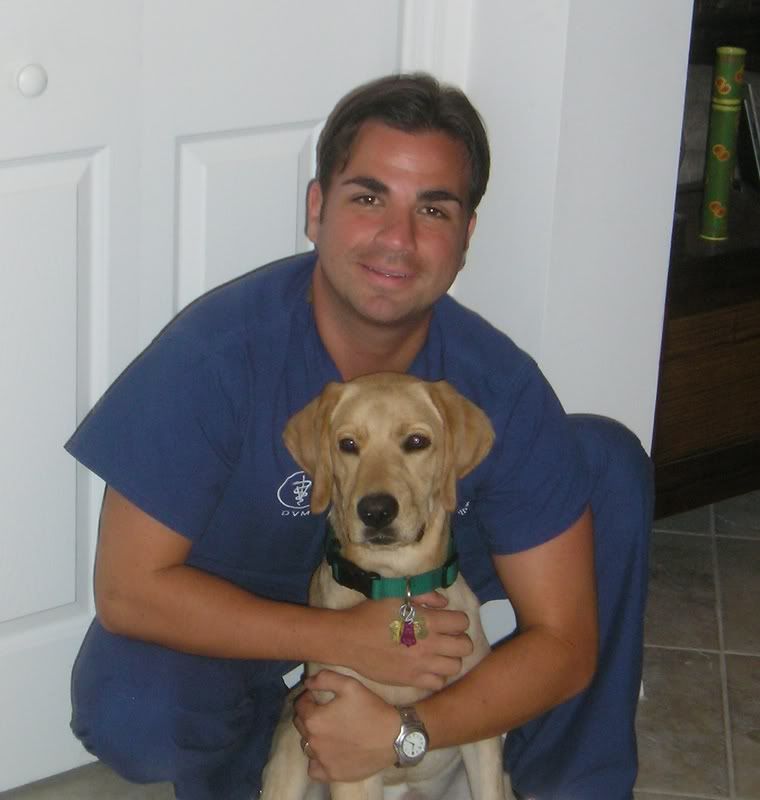
As the popularity of purchasing pet medications from online pet medication retailers continues to increase, it becomes an ever increasingly controversial aspect of the pet health care industry. Veterinarians are disturbed by this trend first and foremost because of the loss of pet medication revenue being funneled instead to large pet medication online corporations. From an ethical standpoint, the sale of many of these medications occurs by unethical means, that is, manufacturers whose policy is to enforce quality control by making their products veterinarian exclusive, have this policy circumvented by online pet med corporations that entice a few o greedy vets into buying mass quantities of these medications on their behalf to be channeled into the online retail market for a fee. According to the May 2008 edition of Veterinary Practice News in an article titled "Product Diversion," the online retail pet med market diverts $200 million to $300 million per year on flea preventive medication alone, representing a staggering amount of revenue lost for veternary clinics.
When pet owners choose to save a buck by using these outlets, they think that they are getting one over on the system and sticking it to us greedy vets, but they never stop realize that they hurt themselves, other pet owners, and the community as a whole in the long run. From a strictly economical standpoint, when pet owners choose to buy their pet medications from an online pharmacy rather than a local veterinary clinic, they divert their money from their local economy, and instead feed a corporate giant could that not care less about the economic stability of their city. Local veterinary clinics use revenue to provide health care for their employees and provide them with regular bonuses and raises. Health care, bonuses, and regular raises allows veterinary clinic employees the financial freedom to spend, thereby infusing their own money in the local economy.
Revenue is also used by many clinics to give back to the community. In my clinic, we donate net profits on certain products to a memorial fund established to provide health care for pets of the less fortunate that could not otherwise afford it. We also provide significantly discounted health care services for many animal rescue groups in our county. We are but one example of countless veterinary clinics that engage in giving back to the community for the benefit of animals and pet owners.
By choking off a significant share of the pet care industry's revenue by choosing to patronize corporate giants for your pet health medication needs, veterinary clinics are left with a diminished capacity to provide for their staff and engage in community works. As this trend approaches a critical point where revenue is lost to the point that practice ability to maintain quality employee standards (a situation that is already occuring), practice owners have no choice than to either cut staff, cut benefits, and/or seek alternate ways to make up for that revenue.
One aspect of veterinary medicine that corporate giants cannot touch or capitalize on or exploit is our minds and our skills. With preventive medical sales becoming increassingly a less significant source of revenue for veterinary clinics, practices are gradually establishing a shift where a greater focus is placed on services rather than products. As a result, while the online pet med retail shopper may save $5.00 to $15.00 on preventive medications, they and other pet owners will pay more for examinations, dental prophylaxis, in-hospital treatments, surgeries, and just about any other aspect of veterinary medicine that falls under the category of "services." The Veterinary Practice News Article quoted from earlier in this post is actually a how-to article for veterinarians to begin a veterinary practice paradigm shift from a reliance on product sales to a greater reliance on revenue procured from services, as the result of the increasing popularity of online pet med retailers.
The ones that indeed get hurt the most from online pet med retailers are the many pet owners that continue to choose purchase their preventive medications from veterinary clinics. They unfortunately share in the burden of increased costs of services at no fault of their own. However, while pet owners who frequent online pet med retailers may save a little here and there, when the time comes that their pets require veterinary services to maintain or sustain their pet's health, they too will feel this burden, and in the long run, their preventive medications savings will be at best minimal, if not negated or worse.
My message to all that order pet meds from online pet med retailers is to realize that you purchase veterinarian exclusive medications that are obtained by unethical means dictated by greed above all. If this does not detract you from buying meds online, then consider that you contribute to the compromise of your local economy by funnelling your local money out of your community an into the pockets of corporations. Consider also that this loss of veterinary practice revenue comes at the cost of maintaining optimal employment conditions for veterinary practice staff and leaves us less disposable income to engage in community works that help people and animals of the community. Finally, know that in the long run, your patronage of online pet med retailers will ultimately cost you significantly more in pet health care services, likely negating any savings you may have gained under the best of circumstances. However, for the pet owners that loyally purchase their products from veterinary clinics, through no fault of their own, have to help shoulder the burden of increased cost of services that your actions contributed to.
Monday, July 21, 2008

Saturday, July 12, 2008
A Long Overdue "Thank You" To My Pet Owning Clients
Client relations can be the single most frustrating and stressful aspect of veterinary medicine. The medicine and surgery for the most part are the enjoyable aspects of the veterinary industry, and while challenging cases can lead to difficulty and stress, this stress pales in comparison to the strain poor client behavior places on a practice. Whether clients are difficult because they are ignorant, demanding, stubborn, overbearing, callus, or downright mentally ill, client actions or lack thereof can make for an occasional disagreeable work environment. Given this reality and our human tendency to more acutely remember bad situations as opposed to the more pleasant ones we experience, many of my posts reflect client troubles, especially in my "Incredible But True" segment.
What unfortunately gets overlooked when these few bad apples take center stage in our minds, are the thousands of dedicated, compassionate, generous, and amicable people I feel privileged to call my clients. While I remain ever cognisant of these quality individuals, the recent outpouring of well wishes, cards, and gifts that came with the recent birth of my son (who came early by a tense emergency c-section), I was emphatically reminded of the the kindness of the majority of my clients. Subsequently, this post is dedicated to showcasing the wonderful ways that clients brighten our lives.
Leading up to holidays, clients frequently surprise us with home baked goods, sandwich platters, candy, flowers, and other goodies. Our office becomes so overflowed around Christmas time that we have to dedicate an entire 4x6 cork board to hang all the greeting cards up, and the food and treats fill up all the spare space in our treatment area.
Many clients bring us food and treats when even there is no holiday, just because they want to do something nice for us. One particular client that travels a great deal and has several pets that are treated by us, always presents a neat little gift from yet another interesting place he has just returned from visiting. Another client who frequently brings his beloved black lab in for yearly visits and grooming, always makes it a point to bring the office a box of freshly prepared, still warm, Krispy Kream Donuts.
Other clients astound me with their dedication to their pets. One gentlemen works an extra job to pay for all of his dog's veterinary care, with all of his dogs having been obtained by rescue. Recently, a lady who had been putting off a well needed knee surgery for her dog for some time, booked it finally, apologizing that she took so long, but explaining that she had to wait to get her IRS tax return check to pay for the procedure. Another dear client that is disabled and cannot walk or drive, brings her shihtzus in on her lap as she navigates the streets and sidewalks on her motorized wheelchair, in the process having to cross a busy highway to reach my office.
So often my day is brightened repeatedly by clients that come in for visits that I have known and built a repore with for so long, that I consider them friends. Interaction is so casual and enjoyable with these clients, that appointments often take on more a manner of social pleasantry, than professional doctor-patient-client relations. Repeated experiences like this create relationships with clients on an intimate level, where we share personal anecdotes, advise one another about good restaurants and offer other helpful tips, and sincerely inquire about the well being of one another's families.
To all of you wonderful clients that brighten our days and who are the life blood of our practice, I thank you from the bottom of my heart for allowing us the privilege of being entrusted with the wellness of your beloved pets. Please never forget the gratitude we feel for your dedication to your pets and the agreeable manner in which you treat us and carry yourselves in general.
What unfortunately gets overlooked when these few bad apples take center stage in our minds, are the thousands of dedicated, compassionate, generous, and amicable people I feel privileged to call my clients. While I remain ever cognisant of these quality individuals, the recent outpouring of well wishes, cards, and gifts that came with the recent birth of my son (who came early by a tense emergency c-section), I was emphatically reminded of the the kindness of the majority of my clients. Subsequently, this post is dedicated to showcasing the wonderful ways that clients brighten our lives.
Leading up to holidays, clients frequently surprise us with home baked goods, sandwich platters, candy, flowers, and other goodies. Our office becomes so overflowed around Christmas time that we have to dedicate an entire 4x6 cork board to hang all the greeting cards up, and the food and treats fill up all the spare space in our treatment area.
Many clients bring us food and treats when even there is no holiday, just because they want to do something nice for us. One particular client that travels a great deal and has several pets that are treated by us, always presents a neat little gift from yet another interesting place he has just returned from visiting. Another client who frequently brings his beloved black lab in for yearly visits and grooming, always makes it a point to bring the office a box of freshly prepared, still warm, Krispy Kream Donuts.
Other clients astound me with their dedication to their pets. One gentlemen works an extra job to pay for all of his dog's veterinary care, with all of his dogs having been obtained by rescue. Recently, a lady who had been putting off a well needed knee surgery for her dog for some time, booked it finally, apologizing that she took so long, but explaining that she had to wait to get her IRS tax return check to pay for the procedure. Another dear client that is disabled and cannot walk or drive, brings her shihtzus in on her lap as she navigates the streets and sidewalks on her motorized wheelchair, in the process having to cross a busy highway to reach my office.
So often my day is brightened repeatedly by clients that come in for visits that I have known and built a repore with for so long, that I consider them friends. Interaction is so casual and enjoyable with these clients, that appointments often take on more a manner of social pleasantry, than professional doctor-patient-client relations. Repeated experiences like this create relationships with clients on an intimate level, where we share personal anecdotes, advise one another about good restaurants and offer other helpful tips, and sincerely inquire about the well being of one another's families.
To all of you wonderful clients that brighten our days and who are the life blood of our practice, I thank you from the bottom of my heart for allowing us the privilege of being entrusted with the wellness of your beloved pets. Please never forget the gratitude we feel for your dedication to your pets and the agreeable manner in which you treat us and carry yourselves in general.
Sunday, July 6, 2008
Have Mercy, Fireworks Enthusiasts
July 4th has come and gone, but like every other year, the fireworks continue to persist and will do so for weeks to come. While this may prove to be a nuisance for residents of suburban neighborhoods, the regular sounds of fireworks drive many dogs and cats to shear panic, in some cases, even to the point that it is a detriment to their health.
This reality is clearly evidenced in the weeks leading up to July 4th and for weeks thereafter, with the barrage of calls clinics receive from clients seeking sedation for their pets that experience severe fireworks anxiety. In response to the explosive noises that many fireworks cause, numerous dogs and cats enter a state of severe and utter panic. Not only is this mentally abusive to these animals, but many will be panicked to the point that they hurt themselves by trying to chew through doors, knock heavy objects or wall unit furniture on top of themselves, and fall from elevations such as decks and terraces, to name a few of the accidents that regularly occur. For animals with cardiopulmonary conditions, such as congestive heart disease, allergic tracheobronchitis, or collapsing trachea, the metabolic stress that fireworks induced panic places on the these patients, can lead to crisis or death. What's more, for many canine and feline patients that experience fireworks anxiety, the feeling of panic is so severe that even conventional sedatives do little to comfort them.
Now, having been one to enjoy a good homemade fireworks display myself on more than one occasion, I am not trying to be killjoy. If fireworks are legal where you live and you like to celebrate our nation's independence by blowing off some fireworks, however, I merely ask that you make the effort to do so at a park or other clearing reasonably removed from homes. If this is not convenient or even possible, then at least keep your fireworks activity to July 4th, and ONLY July 4th, thereby sparing pets prolonged mental torment with potential physical consequences.
This reality is clearly evidenced in the weeks leading up to July 4th and for weeks thereafter, with the barrage of calls clinics receive from clients seeking sedation for their pets that experience severe fireworks anxiety. In response to the explosive noises that many fireworks cause, numerous dogs and cats enter a state of severe and utter panic. Not only is this mentally abusive to these animals, but many will be panicked to the point that they hurt themselves by trying to chew through doors, knock heavy objects or wall unit furniture on top of themselves, and fall from elevations such as decks and terraces, to name a few of the accidents that regularly occur. For animals with cardiopulmonary conditions, such as congestive heart disease, allergic tracheobronchitis, or collapsing trachea, the metabolic stress that fireworks induced panic places on the these patients, can lead to crisis or death. What's more, for many canine and feline patients that experience fireworks anxiety, the feeling of panic is so severe that even conventional sedatives do little to comfort them.
Now, having been one to enjoy a good homemade fireworks display myself on more than one occasion, I am not trying to be killjoy. If fireworks are legal where you live and you like to celebrate our nation's independence by blowing off some fireworks, however, I merely ask that you make the effort to do so at a park or other clearing reasonably removed from homes. If this is not convenient or even possible, then at least keep your fireworks activity to July 4th, and ONLY July 4th, thereby sparing pets prolonged mental torment with potential physical consequences.
Monday, June 30, 2008
Incredible But True II
This is a little segment I like write periodically about recent experiences that seem hard to believe. Whether funny, inspirational, despicable, stupid, or miraculous, as incredible as these short stories may seem, they are oh so true. . .
Insensitive Client
A normally amicable and friendly client came in with his bulldog. My wife, who was about mid way through her pregnancy at this point, was in the exam room with us. The client asked her kindly how her pregnancy was going just as another technician entered the room, who happens to be about 55 years of age. Not having heard what the man said, but thinking that he was addressing her, the older technician asked, "What was that sir?" His reply shocked us all: "I asked how the pregnancy was going, a question clearly meant for Mrs. Welton, not you who is way too old and dried up for that."
Deadbeat Clients
4 months ago I came to the office on a Monday morning following a long weekend and inherited a case from the weekend attending veterinarian, of a very sick rottweiler. With neither myself nor the office manager present, the staff made the big mistake of allowing the doctor to begin an aggressive diagnostic work and treatment course for a patient whose owners had no previous history with our hospital, with no down payment. The canine patient, who was diagnosed with and under treatment for pancreatitis, diabetes, and hepatitis, needed several days of hospitalization to have any chance of survival. When I ordered the floor technician to enforce our policy of collecting 50% of the estimate before we go any further with treatment, the owners of course told us they had no money. When we directed them to Care Credit, they were quickly declined.
After I explained to them that they had already incurred a bill of $500 in diagnostics and treatments, and that I cannot run this up any further without any assurance of payment, they pleaded with me to continue, that they will make $200 payments every two weeks until the bill is paid off. Since the dog (who was a sweetheart of a dog) would die without treatment and my staff having already made the blunder of allowing this case to get this far without any funds from the clients, I reluctantly agreed to move forward.
What followed was a 2 week period which included several days of hospitalization, more diagnostics, and even late night telephone conversations to advise them at home. Their bill had accumulated to over $1200 after this period, and sadly the dog lost his battle with his many ailments and died. Grief stricken, the clients asked me if I would extend them just a bit more credit in order to arrange a private cremation so that they may keep his ashes. Even though they had not yet provided even a nickel toward their bill, out of compassion, I allowed this.
One week later, the owners called me excited and thrilled about the purchase of a new rottweiler puppy, bragging about how the breeder wanted $800 for the dog, but they talked him down to $600. I told them that I was glad that they were resolving their grief so well in such a short time, but that if they can afford $600 for a new puppy, then they can afford to pay the debt they owe to my hospital. To this, the clients assured me that they would square up when they come in for the ashes.
2 weeks later, the husband and wife clients came in to retrieve their dog's ashes, still not having made one single payment toward their bill. At this point, I began to feel very taken advantage of and finally put my foot down, telling them that they will not be permitted to get their ashes until their bill is settled. Once again they pleaded with me to allow them to have their ashes, that they were about to get paid on a contract next week, and their will would be settled then. This time, I did not give in, and told them that I will keep their dog's ashes safe and sound locked in my office, until such time that they pay their bill, after all, what is one more week to wait for the ashes.
Of course, next week came and went, still with no payment from these clients. Eventually, they sent their 16 year old niece to pick up the ashes, having her give us a sob story about how much it hurts her aunt an uncle to not have their dog's ashes, and begging us to release the ashes. I told her that the ashes will be released only after their bill has been settled. I also called the clients to tell them how appalled I was at their sending their young niece to manipulate us into giving the them the ashes.
Now 4 months later, the ashes are still in my office, as these people (they are no longer my clients so I refer to them as people, a term that I am not certain they even deserve) still have not made even one payment on their bill. We have long since sent them to collection and accept the situation as an expensive learning experience.
Impossible To Please Client
A client brought her cat in because he had been falling and unable to walk straight. The attending veterinarian observed the tell tale signs of acute vestibular syndrome (circling, head tilt, falling), a condition that affects the patients ability to balance due to inflammation of the brain stem. We do not know what exactly brings this on, but it tends to spontaneously resolve on its own over a period of hours to up to 14 days. During the recovery period, we treat the patients supportively with antinausea and antidizziness medication.
After the attending veterinarian explained all this to her (good news, considering that the client had thought her cat was suffering a stroke), she proclaimed that the doctor's explanation was not adequate, and she demanded better. Unable to appease the client, the doctor's only recourse was to refer her to a veterinary neurologist for another opinion, thinking that perhaps a neurologist may provide the certainty that this client was supposedly lacking.
Of course, the neurologist concurred with my doctor's assessment, reiterating the likely diagnosis. Still the client was not satisfied and demanded more concrete evidence. An MRI, a CT scan, a spinal tap, and $4000 later, the final diagnosis by exclusion due to lack of any lesions or abnormalities found on these tests, was vestibular syndrome. Still not satisfied, the client stormed out of the referral center with her cat.
As a courtesy, I telephoned the client first thing Monday morning. She explained to me that the cat had spontaneously recovered and was doing well, but was extremely unhappy that no one gave her answers. After spending 30 minutes on the telephone with her explaining the physiology of vestibular syndrome, and the fact that the cat's spontaneous recovery confirmed the diagnosis, she told me that she was not satisfied with any of the doctor's that had seen her cat, including the board certified veterinary neurologist, and demanded that we fax her the cat's records because she was going elsewhere to find another vet who would tell her what happened to her cat - this after 3 veterinarians has clearly done exactly that.
Insensitive Client
A normally amicable and friendly client came in with his bulldog. My wife, who was about mid way through her pregnancy at this point, was in the exam room with us. The client asked her kindly how her pregnancy was going just as another technician entered the room, who happens to be about 55 years of age. Not having heard what the man said, but thinking that he was addressing her, the older technician asked, "What was that sir?" His reply shocked us all: "I asked how the pregnancy was going, a question clearly meant for Mrs. Welton, not you who is way too old and dried up for that."
Deadbeat Clients
4 months ago I came to the office on a Monday morning following a long weekend and inherited a case from the weekend attending veterinarian, of a very sick rottweiler. With neither myself nor the office manager present, the staff made the big mistake of allowing the doctor to begin an aggressive diagnostic work and treatment course for a patient whose owners had no previous history with our hospital, with no down payment. The canine patient, who was diagnosed with and under treatment for pancreatitis, diabetes, and hepatitis, needed several days of hospitalization to have any chance of survival. When I ordered the floor technician to enforce our policy of collecting 50% of the estimate before we go any further with treatment, the owners of course told us they had no money. When we directed them to Care Credit, they were quickly declined.
After I explained to them that they had already incurred a bill of $500 in diagnostics and treatments, and that I cannot run this up any further without any assurance of payment, they pleaded with me to continue, that they will make $200 payments every two weeks until the bill is paid off. Since the dog (who was a sweetheart of a dog) would die without treatment and my staff having already made the blunder of allowing this case to get this far without any funds from the clients, I reluctantly agreed to move forward.
What followed was a 2 week period which included several days of hospitalization, more diagnostics, and even late night telephone conversations to advise them at home. Their bill had accumulated to over $1200 after this period, and sadly the dog lost his battle with his many ailments and died. Grief stricken, the clients asked me if I would extend them just a bit more credit in order to arrange a private cremation so that they may keep his ashes. Even though they had not yet provided even a nickel toward their bill, out of compassion, I allowed this.
One week later, the owners called me excited and thrilled about the purchase of a new rottweiler puppy, bragging about how the breeder wanted $800 for the dog, but they talked him down to $600. I told them that I was glad that they were resolving their grief so well in such a short time, but that if they can afford $600 for a new puppy, then they can afford to pay the debt they owe to my hospital. To this, the clients assured me that they would square up when they come in for the ashes.
2 weeks later, the husband and wife clients came in to retrieve their dog's ashes, still not having made one single payment toward their bill. At this point, I began to feel very taken advantage of and finally put my foot down, telling them that they will not be permitted to get their ashes until their bill is settled. Once again they pleaded with me to allow them to have their ashes, that they were about to get paid on a contract next week, and their will would be settled then. This time, I did not give in, and told them that I will keep their dog's ashes safe and sound locked in my office, until such time that they pay their bill, after all, what is one more week to wait for the ashes.
Of course, next week came and went, still with no payment from these clients. Eventually, they sent their 16 year old niece to pick up the ashes, having her give us a sob story about how much it hurts her aunt an uncle to not have their dog's ashes, and begging us to release the ashes. I told her that the ashes will be released only after their bill has been settled. I also called the clients to tell them how appalled I was at their sending their young niece to manipulate us into giving the them the ashes.
Now 4 months later, the ashes are still in my office, as these people (they are no longer my clients so I refer to them as people, a term that I am not certain they even deserve) still have not made even one payment on their bill. We have long since sent them to collection and accept the situation as an expensive learning experience.
Impossible To Please Client
A client brought her cat in because he had been falling and unable to walk straight. The attending veterinarian observed the tell tale signs of acute vestibular syndrome (circling, head tilt, falling), a condition that affects the patients ability to balance due to inflammation of the brain stem. We do not know what exactly brings this on, but it tends to spontaneously resolve on its own over a period of hours to up to 14 days. During the recovery period, we treat the patients supportively with antinausea and antidizziness medication.
After the attending veterinarian explained all this to her (good news, considering that the client had thought her cat was suffering a stroke), she proclaimed that the doctor's explanation was not adequate, and she demanded better. Unable to appease the client, the doctor's only recourse was to refer her to a veterinary neurologist for another opinion, thinking that perhaps a neurologist may provide the certainty that this client was supposedly lacking.
Of course, the neurologist concurred with my doctor's assessment, reiterating the likely diagnosis. Still the client was not satisfied and demanded more concrete evidence. An MRI, a CT scan, a spinal tap, and $4000 later, the final diagnosis by exclusion due to lack of any lesions or abnormalities found on these tests, was vestibular syndrome. Still not satisfied, the client stormed out of the referral center with her cat.
As a courtesy, I telephoned the client first thing Monday morning. She explained to me that the cat had spontaneously recovered and was doing well, but was extremely unhappy that no one gave her answers. After spending 30 minutes on the telephone with her explaining the physiology of vestibular syndrome, and the fact that the cat's spontaneous recovery confirmed the diagnosis, she told me that she was not satisfied with any of the doctor's that had seen her cat, including the board certified veterinary neurologist, and demanded that we fax her the cat's records because she was going elsewhere to find another vet who would tell her what happened to her cat - this after 3 veterinarians has clearly done exactly that.
Friday, June 27, 2008
Unsung Heroes
Throughout the ongoing Middle East wars our country remains engaged in, whether citizens are supporters of the military campaigns or not, the overwhelming majority of us feel gratitude, admiration, respect, and support for our troops on the front lines of these conflicts. Along these same lines, let us not forget that in addition to these brave people of our military, there are many military working dogs (MWDs) also admirably serving our country, who are also placed in harm's way while bravely performing their invaluable tasks. Many brave and loyal MWDs pay the ultimate price for their deeds and lose their lives in service of their country. Their contributions to our war efforts and sacrifice make them deserving of our respect and acknowledgement.
Interestingly, I learned that war dogs are not a new part of the military, with the use of MWDs dating as far back as World War I. Having been more significantly incorporated in the military campaigns of World War II, MWDs have a long history of service, dedication, and sacrifice for their country. Created by former MWD military handlers inspired by the heroism displayed by their canine partners in arms, below is a website that honors MWDs by acknowledging their deeds with historical MWD information, profiles in MWDs courage, and funding for an actual brick and mortar U.S. War Dog Memorial:
http://www.uswardogs.org
Like any good soldier, a MWD deserves a peaceful, love filled retirement. For anyone wishing to perform a good deed for one who admirably served their country without hesitation, below is a website dedicated to the adoption of retired military working dogs:
http://www.militaryworkingdogadoptions.com
While I do not expect all of my readers to necessarily run out and adopt a retired war dog (although that would be nice), I do ask that everyone consider bringing them up the next time a discussion of the war comes up or share this article and its links with friends. That way, our canine war heroes may one day be unsung no more.
Interestingly, I learned that war dogs are not a new part of the military, with the use of MWDs dating as far back as World War I. Having been more significantly incorporated in the military campaigns of World War II, MWDs have a long history of service, dedication, and sacrifice for their country. Created by former MWD military handlers inspired by the heroism displayed by their canine partners in arms, below is a website that honors MWDs by acknowledging their deeds with historical MWD information, profiles in MWDs courage, and funding for an actual brick and mortar U.S. War Dog Memorial:
http://www.uswardogs.org
Like any good soldier, a MWD deserves a peaceful, love filled retirement. For anyone wishing to perform a good deed for one who admirably served their country without hesitation, below is a website dedicated to the adoption of retired military working dogs:
http://www.militaryworkingdogadoptions.com
While I do not expect all of my readers to necessarily run out and adopt a retired war dog (although that would be nice), I do ask that everyone consider bringing them up the next time a discussion of the war comes up or share this article and its links with friends. That way, our canine war heroes may one day be unsung no more.
Sunday, June 22, 2008
The Miracle Of Life
As a veterinarian, I deliver puppies and kittens on a regular basis, seeing on a level more primitive than ours, the miracle of new life. It never fails to touch a place in my heart when I see the little neonates experiencing the world for the first time, and I observe mommy's maternal instinct immediately kick in as she cleans, nurses, and protects her babies with her life.
As an uncle, cousin, and friend of many who have welcomed their human children into the world, I have seen, albeit as a more heightened and complex conscious experience than the animals, the hope, excitement, and joy that a new child has brought to my loved ones. However, although I have been happy for the joy of my loved ones, and always enjoyed the beauty of their infants and watched in awe as they grew, developed, and changed with time, nothing prepared me for the exhilaration that I felt personally as my son entered this world just three days ago.
The very moment he was taken out of my wife by c-section and so bravely took his first breath and made his first loud cry, I was moved to my core with a rush of love and devotion I hitherto had not felt. All thoughts of self instantly evaporated, except for thoughts of how I could better myself as a person to be the best possible example for my child to emulate, and how I could best optimize my success in order to protect and provide for my wife and baby.
On a level of faith, as a biochemist and veterinarian, having generally viewed life on a scientific level first and foremost, I still never fully abandoned some sense of spirit and divinity much greater than our physical selves. However, since the arrival of my son, spirituality is no longer just a premise that stubbornly refuses to escape my consciousness, but exists now as an active part of my human experience to embrace and enhance the lives of my fledgling family. And while do not at this time subscribe to any one religion in particular (I am currently of the belief that there is truth in all the world's major religions), a sense of the divine is very unlikely ever leave me.
Regarding my own mortality, while I had previously viewed it with trepidation and even fear, all apprehension about this reality of life instantly faded when I met my son. Having turned the page to embark on the next infinitely fulfilling chapter of my life as father, mentor, provider, and protector, I know that I will one day part this earth having done everything in my power and to my best ability to have created a meaningful and solid template for the next generation of my family to build on. My only concern is that I am blessed with the longevity to complete my task - this is only to a certain degree in my hands, so for the most part, one can only hope.
My wife and I are set to leave the hospital this afternoon and we cannot contain our excitement as we anticipate the arrival of our son to his new home, to his nursery that has been finished and waiting for him for over four months. This truly has been the most fulfilling and happiest moment of our lives.
Please join us in welcoming Austin Lee Welton to the world, born June 19, 2008, at 10:33 AM.
As an uncle, cousin, and friend of many who have welcomed their human children into the world, I have seen, albeit as a more heightened and complex conscious experience than the animals, the hope, excitement, and joy that a new child has brought to my loved ones. However, although I have been happy for the joy of my loved ones, and always enjoyed the beauty of their infants and watched in awe as they grew, developed, and changed with time, nothing prepared me for the exhilaration that I felt personally as my son entered this world just three days ago.
The very moment he was taken out of my wife by c-section and so bravely took his first breath and made his first loud cry, I was moved to my core with a rush of love and devotion I hitherto had not felt. All thoughts of self instantly evaporated, except for thoughts of how I could better myself as a person to be the best possible example for my child to emulate, and how I could best optimize my success in order to protect and provide for my wife and baby.
On a level of faith, as a biochemist and veterinarian, having generally viewed life on a scientific level first and foremost, I still never fully abandoned some sense of spirit and divinity much greater than our physical selves. However, since the arrival of my son, spirituality is no longer just a premise that stubbornly refuses to escape my consciousness, but exists now as an active part of my human experience to embrace and enhance the lives of my fledgling family. And while do not at this time subscribe to any one religion in particular (I am currently of the belief that there is truth in all the world's major religions), a sense of the divine is very unlikely ever leave me.
Regarding my own mortality, while I had previously viewed it with trepidation and even fear, all apprehension about this reality of life instantly faded when I met my son. Having turned the page to embark on the next infinitely fulfilling chapter of my life as father, mentor, provider, and protector, I know that I will one day part this earth having done everything in my power and to my best ability to have created a meaningful and solid template for the next generation of my family to build on. My only concern is that I am blessed with the longevity to complete my task - this is only to a certain degree in my hands, so for the most part, one can only hope.
My wife and I are set to leave the hospital this afternoon and we cannot contain our excitement as we anticipate the arrival of our son to his new home, to his nursery that has been finished and waiting for him for over four months. This truly has been the most fulfilling and happiest moment of our lives.
Please join us in welcoming Austin Lee Welton to the world, born June 19, 2008, at 10:33 AM.
Monday, June 16, 2008
Finally, The Magic "Shot" Has Arrived
Some pets can be difficult and uncooperative for owners attempting to administer oral medications. On occasion, "difficult and uncooperative" is far too kind a description for the way some pets act when approached with oral medication, a problem especially prevalent with cats and small dogs. Owners of pets like this, when faced with the reality of having to administer oral antibiotics for a typical antibiotic course (10-14 days), often ask me, "isn't there just s shot you can give instead?"
Up until just last week, my answer to this question has always been that I could indeed give an antibiotic injection, but after 24 hours it will wear off, and oral antibiotics will have to begin to be administered, lessening the total course by only one day. However, all that changed when I attended a seminar presented by Pfizer, a major animal health pharmaceutical company, introducing their one time injectable antibiotic, Convenia (generically called cefovecin).
Convenia is an antibiotic that persists in canine and feline tissues for 17 days or longer according to data obtained from its extensive veterinary use in Europe, enabling bacterial fighting activity for up to 17 days or longer from just one injection. This is beneficial for the owner because they do not have to preoccupy themselves with the administration of oral medication. For owners with pets that are challenging to medicate, Convenia is especially attractive.
For veterinarians, we love Convenia because it takes out of the equation the single most common reason why antimicrobial treatment fails: owner non-compliance. Owners frequently fail to administer antibiotics in a timely fashion due to scheduling conflict, or busy lifestyles leading to forgetfulness. On other occasions, seeing significant improvement in the early stages of treatment, they decide to stop treatment to save the rest of the antibiotics for another time they suspect an infection and want to try to save on a vet visit. In fact, statistically, only less than 25% of pet owners administer medications as directed and to completion, a fact that both astounds and alarms me.
These actions lead to not only a relapse of infection, but often infections that are new and improved, because they have developed antibiotic resistance. With Convenia, veterinarians eliminate owner compliance issues, placing treatment entirely in our hands.
Of course, no drug is perfect and comes with its own set of drawbacks, and Convenia is no exception. As a cephalosporin class antibiotic, it is only going to be effective against gram positive bacteria with limited gram negative action, making it appropriate for only certain types of infections. Right now, it is only labelled for use against skin infections (most of which tend to be streptococcus or staphylococcus species bacteria), although, I suspect that it will likely be a good choice for upper respiratory infections and first or second time urinary tract infections.
The other drawback is the price of treatment, with the average injection costing the pet owner around $2 per pound of body weight. While this may be quite affordable for owners of small to medium sized dogs or cats, the price of treatment can get very high for large or giant breeds.
Still, having been using the drug for a little over a week, I find my clinic already flying through its supplies of Convenia. When used at appropriate times, Convenia has proven itself an invaluable tool to ensure owner treatment compliance, as well as create convenience and ease of treatment for clients.
P.S.: I have no affiliation with, nor do I receive any incentives from, Pfizer, As such, my critique of Convenia 100% objective, written solely for my reader's information, and not meant to be taken as an endorsement of any kind.
Up until just last week, my answer to this question has always been that I could indeed give an antibiotic injection, but after 24 hours it will wear off, and oral antibiotics will have to begin to be administered, lessening the total course by only one day. However, all that changed when I attended a seminar presented by Pfizer, a major animal health pharmaceutical company, introducing their one time injectable antibiotic, Convenia (generically called cefovecin).
Convenia is an antibiotic that persists in canine and feline tissues for 17 days or longer according to data obtained from its extensive veterinary use in Europe, enabling bacterial fighting activity for up to 17 days or longer from just one injection. This is beneficial for the owner because they do not have to preoccupy themselves with the administration of oral medication. For owners with pets that are challenging to medicate, Convenia is especially attractive.
For veterinarians, we love Convenia because it takes out of the equation the single most common reason why antimicrobial treatment fails: owner non-compliance. Owners frequently fail to administer antibiotics in a timely fashion due to scheduling conflict, or busy lifestyles leading to forgetfulness. On other occasions, seeing significant improvement in the early stages of treatment, they decide to stop treatment to save the rest of the antibiotics for another time they suspect an infection and want to try to save on a vet visit. In fact, statistically, only less than 25% of pet owners administer medications as directed and to completion, a fact that both astounds and alarms me.
These actions lead to not only a relapse of infection, but often infections that are new and improved, because they have developed antibiotic resistance. With Convenia, veterinarians eliminate owner compliance issues, placing treatment entirely in our hands.
Of course, no drug is perfect and comes with its own set of drawbacks, and Convenia is no exception. As a cephalosporin class antibiotic, it is only going to be effective against gram positive bacteria with limited gram negative action, making it appropriate for only certain types of infections. Right now, it is only labelled for use against skin infections (most of which tend to be streptococcus or staphylococcus species bacteria), although, I suspect that it will likely be a good choice for upper respiratory infections and first or second time urinary tract infections.
The other drawback is the price of treatment, with the average injection costing the pet owner around $2 per pound of body weight. While this may be quite affordable for owners of small to medium sized dogs or cats, the price of treatment can get very high for large or giant breeds.
Still, having been using the drug for a little over a week, I find my clinic already flying through its supplies of Convenia. When used at appropriate times, Convenia has proven itself an invaluable tool to ensure owner treatment compliance, as well as create convenience and ease of treatment for clients.
P.S.: I have no affiliation with, nor do I receive any incentives from, Pfizer, As such, my critique of Convenia 100% objective, written solely for my reader's information, and not meant to be taken as an endorsement of any kind.
Subscribe to:
Posts (Atom)