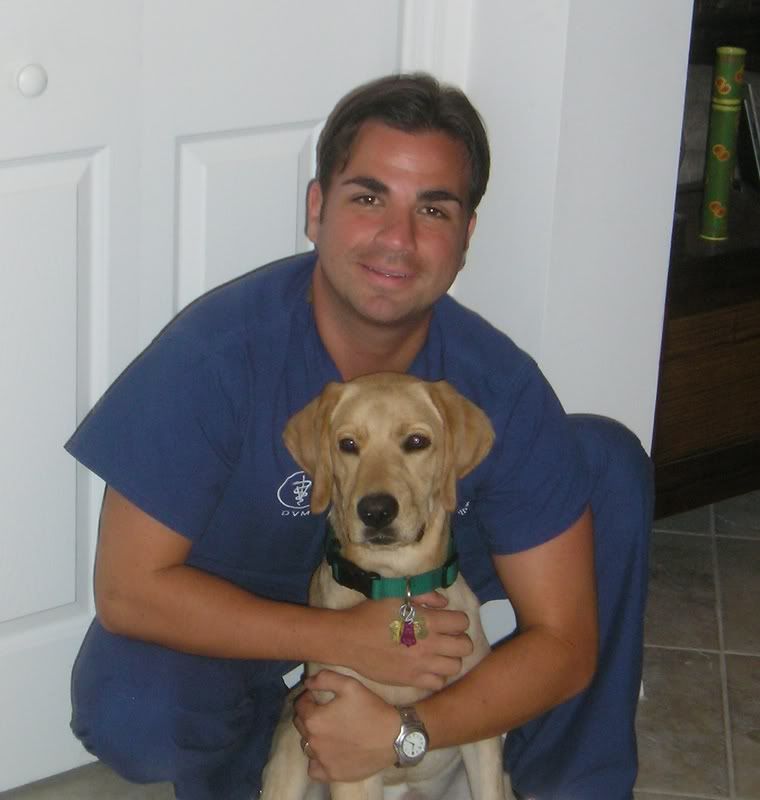
Listen to this podcast directly from my show page by CLICKING HERE.
Podcast airs Wednesday, October 19, 2011, 9 PM EST
Greetings loyal viewers, listeners and readers,
Now 3 years old, my son Austin is aware enough of last year’s Halloween experience to look forward to dressing up (this year as Iron Man per his request), go trick or treating, and eat free candy. Seeing my son in his little get-up walking up to people’s door to enthusiastically say “twick or tweet” brings me a joy I never expected. Seeing his little friends and all the adorable neighborhood kids so happily engaging in this tradition brings us all back to more innocent and carefree time when dressing up for Halloween was one of the most important priorities of the year.
In this episode, I will be talking about the unique opportunity Halloween brings pet owners to dress up their beloved furry companions in cute, often downright hilarious costumes. With very agreeable weather this time of year here in Florida, many people spend the evening doling out candy sitting outside with tables and chairs set out on their driveways, and increasingly, with their pets at their side dressed up in some of the cutest and outrageous costumes I have ever seen on any species!
I will also be discussing some common pet dangers that present themselves during the Halloween season, how prevent them, and what to do if your pet falls victim to one of them, plus this evening we have 4 listener e-mail questions that I will be addressing on the air.
As always, thanks again for caring about what I have to say, and keep the e-mails coming!
Dr. Roger Welton is the President and chief veterinarian at Maybeck Animal Hospital in West Melbourne Florida, as well as CEO of the veterinary advice and health management website Web-DVM.net.
Transcript from this week's episode of The Web-DVM:
Your beloved canine companion clearly is not a cow, so it may be a bit strange to see him grazing on grass outside. It’s even weirder to see your cat doing this. So why in the world would they do this?
Let’s start with dogs. One bit of misinformation out there maintains that dogs are pure carnivores, meaning that they supposedly subsist predominantly on meat based protein. Realistically, however, dogs are omnivores just like people, in that they thrive ideally with a mixed diet consisting of both plant matter and meat, making the craving of plant matter like grass, not entirely unusual after all. Even their ancient cousin the wolf is omnivorous, engaging in the eating of plant matter with similar acts of grazing on grasses, as well as eating the plant matter out of the guts of their herbivorous prey.
Some dogs only seem to eat grass when they are feeling sick, prompting the owner to schedule to a vet visit because Buffy is repeatedly eating grass and vomiting it back up. Grass, after all, contains fiber which can help to expel worms and provide bulk to relieve diarrhea. Some grasses are rich in the green pigment chlorophyll, a compound that is rich in anti-oxidants and free radical scavengers that help to boost an immune system stressed with illness. Chlorophyll also has antiseptic properties, which could be helpful in cases of bacterial infections of the gut.
Many veterinarians dismiss this notion of dogs craving grass only when they are ill, maintaining that they are just not intelligent enough to know that some elements of certain kinds of grasses may be beneficial during times of GI upset, that their grass eating and GI upset are simply coincidental. I do not happen to be of this opinion.
While I would agree that dogs are not going to be smart enough to seek treatment for GI upset on their own the way we seek ant-acids for indigestion, I believe that on some instinctual level born of evolution, some dogs do indeed engage in the eating of grass only when sick.
For other dogs, the eating of grass is strictly a behavioral phenomenon, done simply out of boredom. This fact is evidenced by the numbers of grass eaters that are less apt to partake in grass grazing after the owner takes more time to play with and engage with the dog.
So what about cats? Interestingly, dietary-wise, cats are quite different from dogs and people in that they actually are true carnivores meaning they can fulfill all of their dietary needs and essential nutrients by eating a 100% meat diet. Given this fact, it seems especially strange that a cat would enjoy grazing on grass, but the truth is that many do. While the common storyline from dog owners is that Buffy only eats grass when he is sick, the same is not heard with nearly the same frequency in cats.
This seems to make the instinctual evolutionary craving for the aforementioned medicinal elements of grass less likely to be the case in cats. Still, since we cannot ask them, it cannot be completely dismissed. More likely, however, cats that tend to graze on grass do so out of boredom.
So what do you do if your dog or cat grazes on grass? Is it a problem? Well, if your dog or kitty is one of those that only seem to eat grass to vomit it up when sick, then perhaps you should schedule a veterinary visit to deal with said illness that prompted the behavior.
For all others that simply seem to enjoy it, try engaging with the pet more to alleviate potential boredom. For dogs, consider more walks, swimming, fetching, or just tickling the tummy as often as possible. For cats, try getting a cat jungle gym in the home, engage in play with cat toys or a laser pointer, or consider getting Tiger a window stand for more visual stimulation.
If in the end, your dog or cat eats grass no matter what you do, it is not likely to cause any harm, in fact, it could even stand to do them some good. The only caveat to this is that many commercial lawn pesticides can cause harm to your dogs and cats if ingested with the grass. As such, for homes of pets that have a tendency to dine on the lawn, it is wise to choose only lawn pest control products that are organic and safe for animal ingestion, or avoid them altogether if possible.
Dr. Roger Welton is the President and chief veterinarian at Maybeck Animal Hospital in West Melbourne Florida, as well as CEO of the veterinary advice and health management website Web-DVM.net.
Listen to this podcast directly from my show page by CLICKING HERE.
Podcast airs Wednesday, September 28, 2011, 9 PM EST
Greetings readers, listeners and viewers:
Tonight's podcast deals with the veterinary care side of our ongoing and seemingly never ending economic malaise, a reality that affects both the veterinary industry and pet owners alike. On our side, patient visits are down and have been steadily decreasing over the past three years. On you the pet owners' side, many of you have been faced with making the difficult choice between providing quality wellness care for your pets or making sure your families remain fed and clothed. It is both frustrating and at times even heartbreaking from either side of that equation.
In this podcast, I discuss some modalities that pet owners can take advantage of in order to not necessarily have to sacrifice some level of quality wellness care for your pets during tough economic times. I present these options objectively, explaining how some are indeed too good to be true, while others may be worth your careful consideration. In the end, it is not wise to let the ideal be the enemy of the good, and in tonight's talk, I aim to help you steer through the options available to you as a caring pet owner with a limited budget.
We also have three excellent e-mail questions submitted that I will address on the air, one notably all the way from France, while another is from a fellow practicing veterinarian. Hope you enjoy the show, and please keep the comments and e-mails coming!
Thanks again for caring to hear what I have to say! :)
Regards,
Roger Welton, DVM
Send e-mail questions or comments for Dr. Roger to discuss on the air to comments@web-dvm.net
Dr. Roger Welton is the President and chief veterinarian at Maybeck Animal Hospital in West Melbourne Florida, as well as CEO of the veterinary advice and health management website Web-DVM.net.
Transcript from this week's episode of The Web-DVM:
Welcome back ladies and gentlemen, to a new season of The Web-DVM. Thank you so much for continuing to take the time to watch the show. As promised, I have a big announcement about a project I dedicated a lot of time to over the summer.
Many of you who watch are YouTubers that have subscribed having come across my webcasts by chance, through search engine, or through word of mouth. What many of you are not aware of is that this webcast was originally meant to be a media supplement to a veterinary health information website I founded called Web-DVM.net. In short, this show and my BlogTalkRadio podcast were just created to add some spice and updated content to what I deemed the much bigger and more important Web-DVM.net. Little did I know that this webcast and my podcast would take on lives of their own, drawing thousands of viewers and listeners each week.
But Web-DVM.net remains, receives 50, 000 unique visitors per month, and is a project I am still very proud of, especially now that I have added a virtual dog and cat symptom checker. That is, if your pet is exhibiting signs of illness or disease, you can go to the Web-DVM.net symptom checker and use the tool to try to narrow down what may be wrong with your pet. The symptom checker provides the user a set of possible causes of disease, each with a link to an in-depth article about each given condition. Best of all, it is free to use at your leisure, without need for any registration or login. Just show up and use it. Here is a brief example of how it works.
Pause for symptom checker illustration
Pretty cool, huh? Now, while I invite you to use the Web-DVM.net symptom checker as often as, and whenever you like, please let me be clear that it is not meant to be a replacement for your veterinarian. I will repeat that one more time, it is not a replacement for your veterinarian. It is an educational tool only meant to aid pet owners understand if a certain set of signs can mean there is disease present, while also getting an idea of the urgency associated with a particular set of signs. That said, enjoy it, and thank you once again for remaining a fan of my show. Please join me next time, when I will be answering the ever so common question, “Why do some dogs and cats eat grass?”
Dr. Roger Welton is the President and chief veterinarian at Maybeck Animal Hospital in West Melbourne Florida, as well as CEO of the veterinary advice and health management website Web-DVM.net.
Listen to this podcast directly from my show page by CLICKING HERE.
Hello everyone and thank you for your patience this summer during my abscence. My media work is one of my favorite aspects of my veterinary career and I am itching to get back to corresponding with all of you. Whether you are a fan of my BlogTalkRadio podcast, my YouTube webcast, or both, we are set to kick off the new season tomorrow night, Wednesday 9 PM EST with my podcast, Veterinary Advice, Animal News and Views.
In this show, I will be announcing the completion of an exciting project that I worked on all summer that will be free for pet owners to enjoy great benefits from. I will then highlight some changes that will be in effect for the new fall season and transition into the evening's topic of The Itchy Pet.
For those of you that are waiting for return of The Web-DVM YouTube webcast, the first one is set to air one week from tomorrow, Wed 9-21-2011, where I will be discussing my project further, as well as showing it in action. My plan for this season with a very demanding schedule is to alternate every other week between my podcast and webcast. I love both genres equally for different reasons, but doing both each week turned out to be too much of a demand on my time.
Thank you all again for your patience this off season, and for caring enough to listen to little old me! I hope the my new project I have to offer you, as well as this season's topics and formats will be such that I do not disappoint!
Dr. Roger Welton is the President and chief veterinarian at Maybeck Animal Hospital in West Melbourne Florida, as well as CEO of the veterinary advice and health management website Web-DVM.net.
Transcript from this week's episode of The Web-DVM:
Season Finale! Online Pet Pharmacies: Saving Money or Danger to your Pet?
Their ads promise to save you lots of money and even “a stressful trip to the veterinarian”. You are encouraged by slick video and professional announcers to purchase flea medications, pain relief drugs and even heartworm prevention all from the comfort of your living room and laptop computer. But, are online pet pharmacies really the best option for you or are there hidden dangers?
With record numbers of families enjoying the benefits of pet ownership and online shopping, it should come as no surprise that the amount of money spent on our pets is huge. Experts are forecasting that pet owners will spend more than $50 billion dollars annually. A significant percentage of those expenses include veterinary care and prescription medications. So, is it any wonder that buying your prescription medications online may also look like a good deal?
At first glance, online pet pharmacies would seem to be a great option. The promise of lower prices and having the medication shipped to your door is a big selling point for busy, budget conscious people. But, there are some pitfalls when relying on Internet based sources for your pet’s medication needs.
First, they all say you can “save a trip to the vet”. Unfortunately, this is only partially true. In order to prescribe and dispense medication to your pet, most states require that there is a valid veterinarian-client-pet relationship or VCPR. This is usually defined as a veterinarian having examined your pet within the last 12 months. If the VCPR does not exist, medication cannot be dispensed.
Some websites will offer to sell the drugs without a prescription. This is not only illegal but not in the best interest of your pet! Websites that sell without needing prescriptions are most often based outside of North America, where pharmacy and drug laws may not be as strict.
The requirement for this professional relationship insures that you and your veterinarian have good, up to date facts about your pet’s health. Plus the medical records and history for your pet are all in one place. The veterinary staff also knows your whole pet family and can help prevent problems when there are multiple species present in the household.
Since pets are unique individuals, some may have unexpected reactions to certain drugs and some medications can even be deadly if given incorrectly. Others may need a special formulation for ease of administration. The online pharmacies will not know this information and this could be a problem if your pet is on several medications or has secondary conditions.
If a life-threatening emergency happens with a medication, your veterinarian is only a phone call away. Some online pharmacies only allow contact through email and this will not help you if your pet needs assistance immediately!
Finally, despite many good businesses online, there will always be a few who are looking for a quick buck at your expense. Avoid sites that offer dramatically lower prices than competing sites or your veterinarian. Likewise, if you have ordered medication online, check the drug to make sure it looks similar to what you have given before. If it looks different in any way, do not give it to your pet.
The FDA is so concerned about this, it is now warning pet owners to be aware of shady online companies. And, the National Board of Pharmacies has instituted the Veterinary Verified Internet Pharmacy Practice Sites program (Vet-VIPPS) to help you find properly licensed and compliant online pet pharmacies. Only twelve companies so far have earned the right to display the Vet-VIPPS seal of approval.
Check with your veterinarian about online pharmacies. Many veterinary hospitals now offer their very own store on their websites. You can order your pet’s medications conveniently from home, possibly even get home delivery and you know that the source is reputable. In addition, you will know who you are talking to in case of any problems or concerns. Honest and open communication with your veterinarian about cost concerns will prevent misunderstandings about money and help you do what’s best for your pet.
This episode concludes our 2011 spring season, we will return with all new episodes in September, 2011. I will be using this time off to work on a project that stands to benefit pet owners worldwide. I plan to announce it in the first episode of the new season, so please be sure to keep in touch. This is Roger Welton reporting, for The Web-DVM.
Don't forget to catch my live call-in radio show Wednesdays 9PM EST. Listen via podcast live or archived here:
Dr. Roger Welton is the President and chief veterinarian at Maybeck Animal Hospital in West Melbourne Florida, as well as CEO of the veterinary advice and health management website Web-DVM.net.
Transcript from this week's episode of The Web-DVM:
The Down and Dirty on Fleas!
Greetings, pet lovers, this is Dr. Roger Welton, veterinarian and Veterinary News Network Reporter.
The most common type of flea in the U.S. is the Ctenocephalides felis…or the Cat Flea. Despite its name, this species will feed from cats, dogs and even humans. . These wingless insects attack both people and pets and feed by drawing blood from their host.
While most people relate to the irritation of flea bites, fleas can transmit more serious diseases. Flea allergy dermatitis is certainly the most common problem associated with fleas, but they can also transmit Bubonic Plague, tapeworms and Feline Infectious Anemia.
The challenge of winning the flea battle lies in understanding the flea’s life stages, then attacking all levels of the life cycle.
A single female flea can lay 20-50 eggs at a time, creating over 2000 fleas in her life span of three months. With just 25 adult female fleas that equates to more than a quarter of a million fleas in only 30 days!
The non-sticky eggs fall off the pet, ending up in your carpeting, pet bedding or furniture upholstery. Outdoor environments such as leaf litter, lawn or mulch in moist and shady areas are also ideal environments for egg incubation.
Flea eggs hatch after 1-10 days (depending on the temperature and level of humidity) into larvae. These larvae feed off flea feces and debris, then molts three times in a 5-25 day period before spinning a cocoon (pupae). The flea pupae then hatch in as few as 5-9 days to the fully formed adult….OR they can remain dormant for up to five months.
Adult fleas comprise only about 5% of the entire flea population. The remaining 95% consists of eggs, larvae and cocoons in the pet’s environment. It’s easy to see how the flea can quickly invade and even overrun your home.
Expert “Flea Guru”, Dr. Michael Dryden recommends a combination of products and procedures. The very important first step is a visit to your veterinarian. “You can beat the fleas, but you have to purchase the right products.” Flea products obtained from a veterinarian have been proven effective through rigorous testing. Topically applied products like Frontline, Advantage & Revolution have worked well in the battle against the flea as has the orally administered pills, Capstar and Comfortis. With the rapid life cycle of the flea, the product must have a kill ratio of 90-95% to be considered effective. Anything less will not do the job completely.
Dr. Dryden continues “That’s not the case for (generally less expensive) over-the- counter products. Natural and organic doesn’t necessarily mean safe. I’m all for green and saving the planet. But I am also all for using a product which is proven safe for my pets.”
Shampoos and collars are less effective and in some cases can even cause harm to your pet. For example, the wrong dose of your dog’s flea product can have devastating and even life-threatening results if given to your cat. It may sound silly, but the EPA estimates that this mistake happens thousands of times every year!
Once the flea does appear, Dr. Dryden promotes a 3-part plan. The first step: eradicate the existing fleas on your pet. Proper product usage is very important and, remember, one dose won’t eliminate all the different stages.
Secondly, it’s necessary to ensure that you have rid the premises of the fleas. Use products that contain Insect Growth Regulators (IGRs) to kill flea eggs and larvae. Your outdoor environment may need to be professionally treated. You need to regularly clean the indoor areas frequented by your pets. Treat ALL dogs and cats….not just the affected pet. And all pets should be treated for at least three to six months to ensure total elimination.
.
Thirdly, prevent new infestations with lifelong flea control. Using a veterinarian recommended flea product will kill all levels of the flea infestation. If the flea can’t reproduce, it will become extinct. However, if even one cycle of flea prevention is missed, the battle will continue.
Knowing how to combat fleas is really more than half the battle. And although they are hardy little critters, we do have safe effective products to fight these bugs. Ask your veterinarian for product recommendations and advice.
This is Roger Welton reporting, for The Web-DVM.
Don't forget to catch my live call-in radio show Wednesdays 9PM EST. Listen via podcast live or archived here:
Dr. Roger Welton is the President and chief veterinarian at Maybeck Animal Hospital in West Melbourne Florida, as well as CEO of the veterinary advice and health management website Web-DVM.net.
Dr. Roger Welton is an experienced ER and general practice veterinarian, and reporter for the Veterinary News Network (VNN). He is a published author and expert in his field, offering advice, pertinent veterinary information and news to the general pet owning public through his YouTube and BlogTalkRadio shows, which are embedded weekly here for your viewing and listening convenience. Dr. Welton is a reporter for the Veterinary News Network (VNN), enabling him to offer the most up to date, interesting, and cutting edge pet related information. Dr. Welton is happily married with 2 small children, and in his spare time competes in triathlons and coaches youth league lacrosse.